PROJECT FACTS
Function: Museum of Architecture and Design
Location: Helsinki (Finland)
Year: 2024
Type: international competition
In collaboration with Zsófia Miklós
Renders: Balázs Kutas
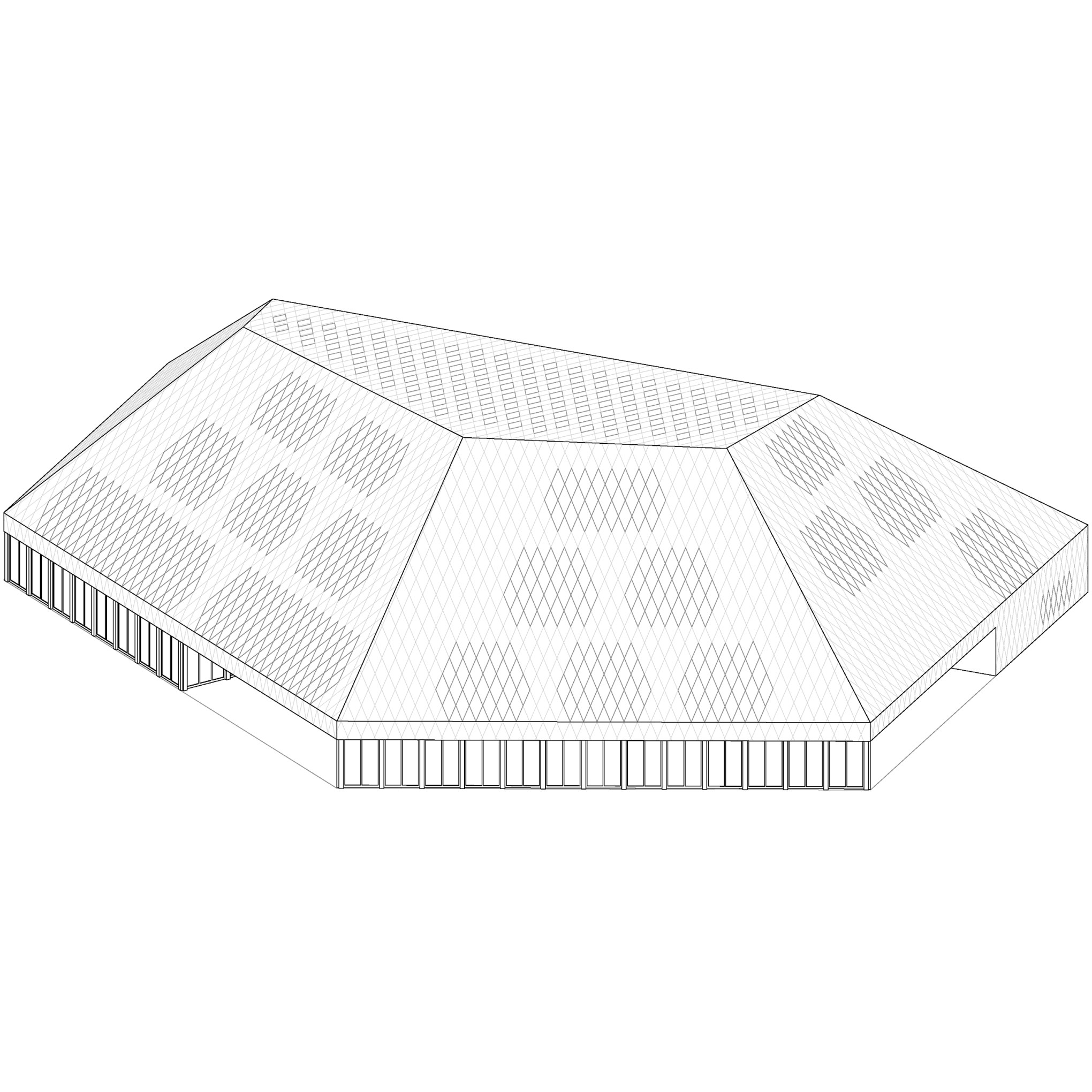
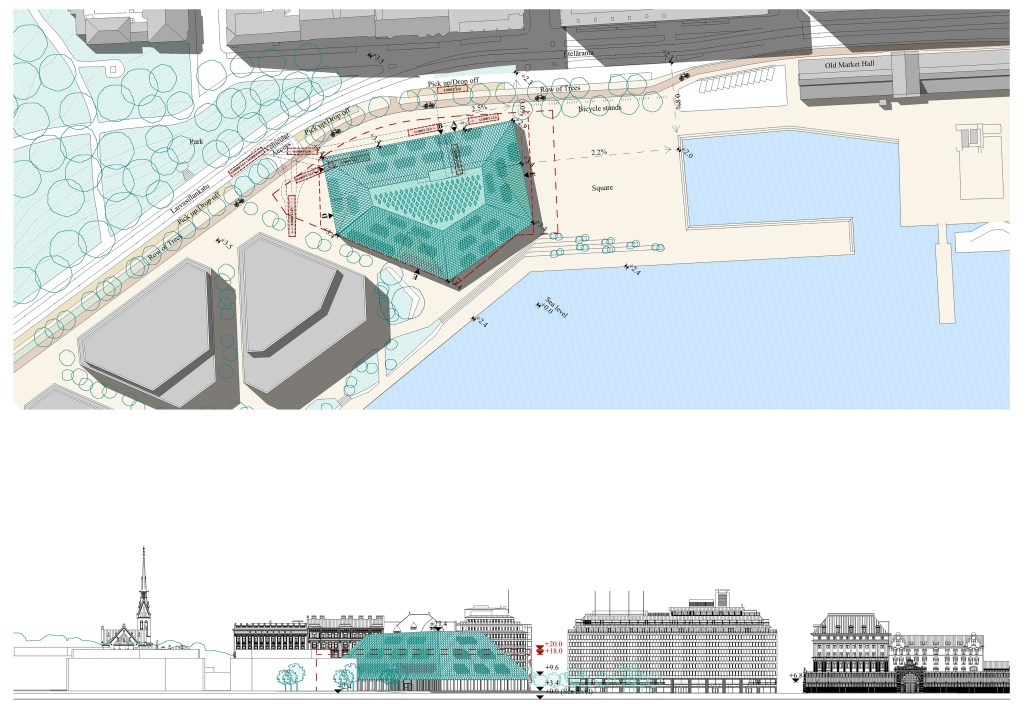
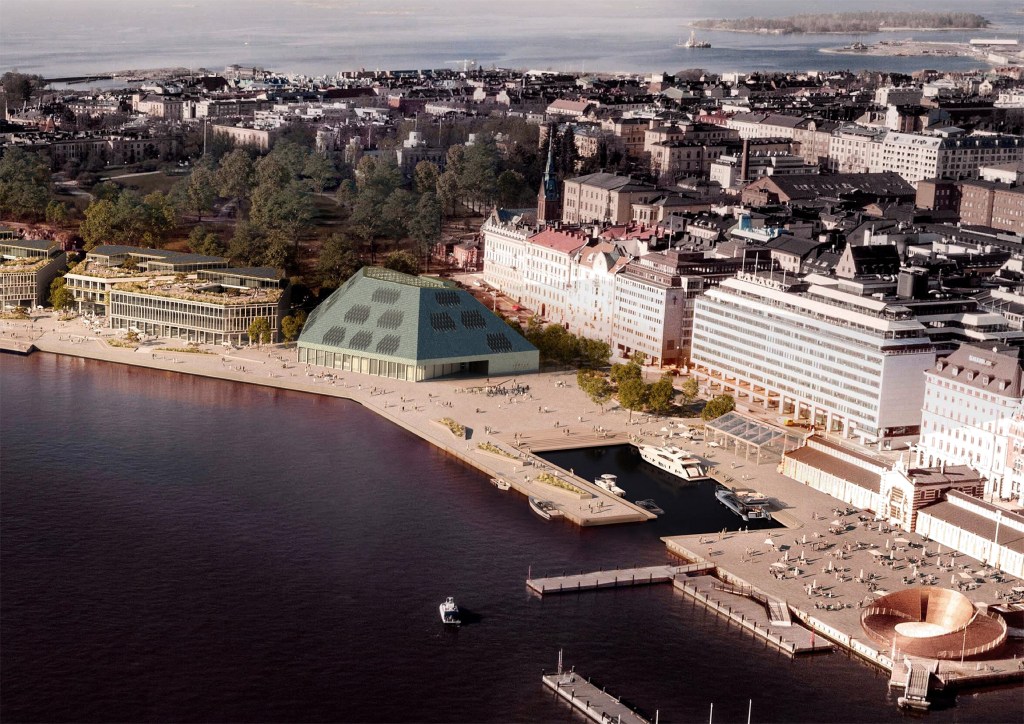
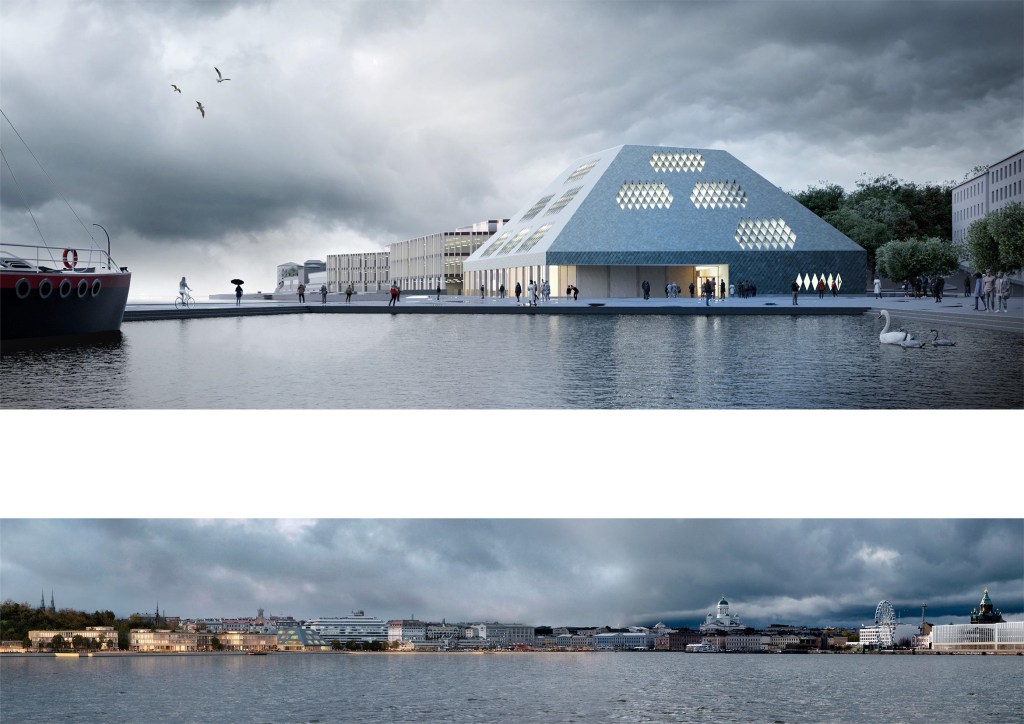
Noticeable, sustainable, traditional yet innovative: this could be Helsinki’s new Museum of Architecture and Design. The proposed design completes the planned urban-scale project while also reflecting the pavilion-like buildings of the harbor and the park behind it. Its form is present in the square, but it does not seek to dominate its surroundings.
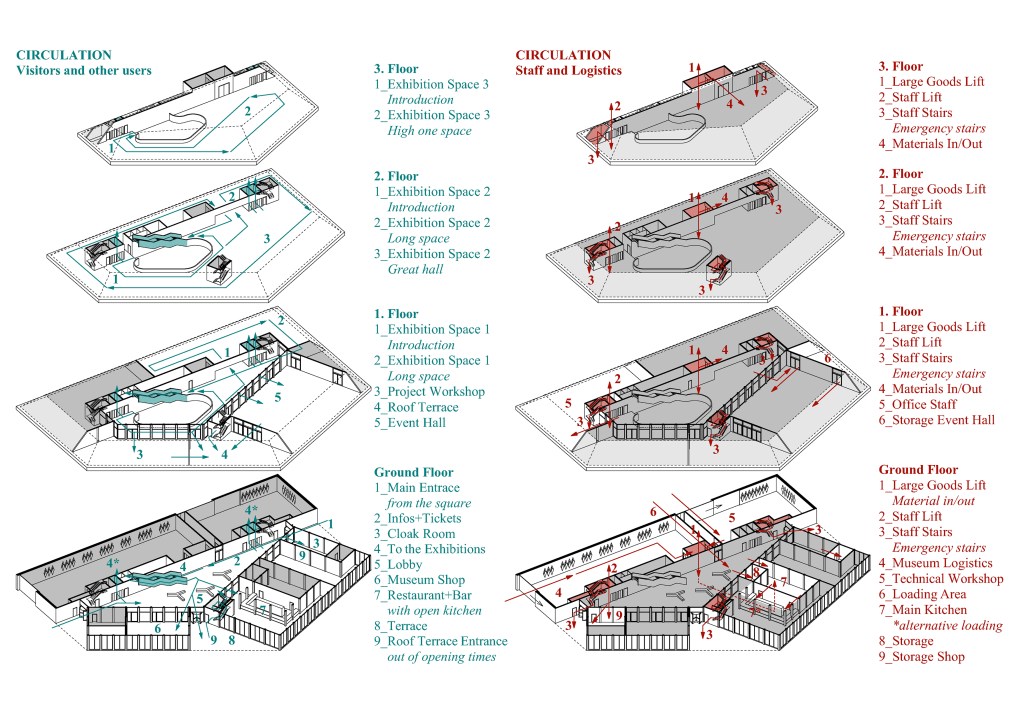
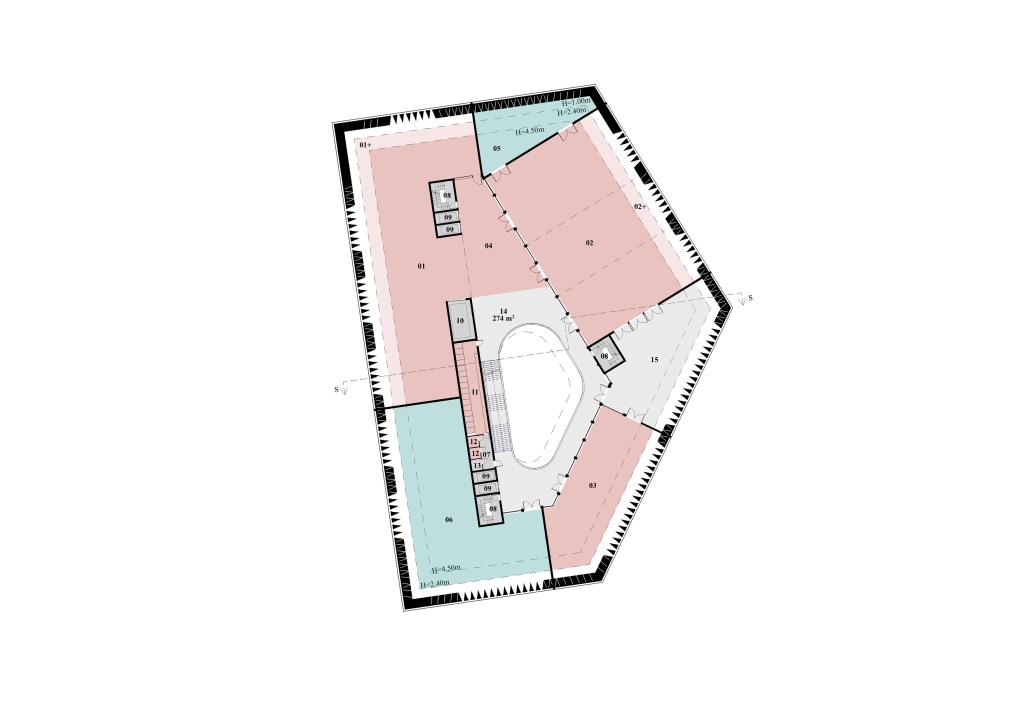
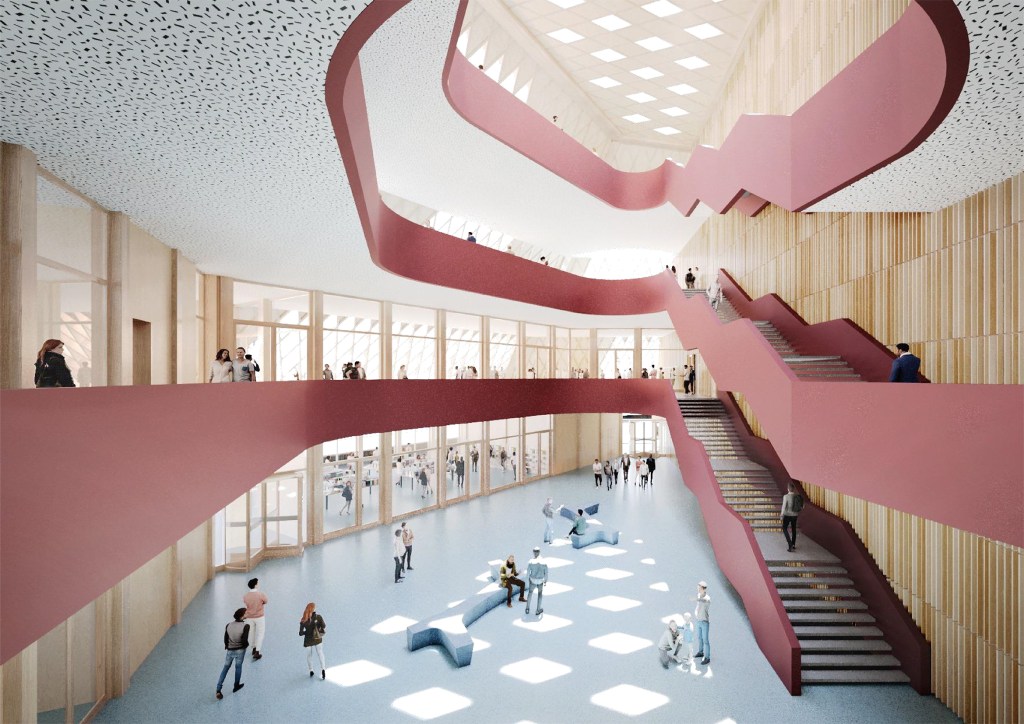
Around the free-shaped ceiling perforation next to the main staircase some important functions are taken place: the first floor gallery has a longitudinal direction, the event hall has a funtional rectangular form and faces to the sea, the project workshop is an bright space, and the offices of the museum staff are oriented to the park. Out of opening hours the event hall and the project workshop spaces can be reached over the roof terrace, which is connected by a stairwell with the ground floor terrace.
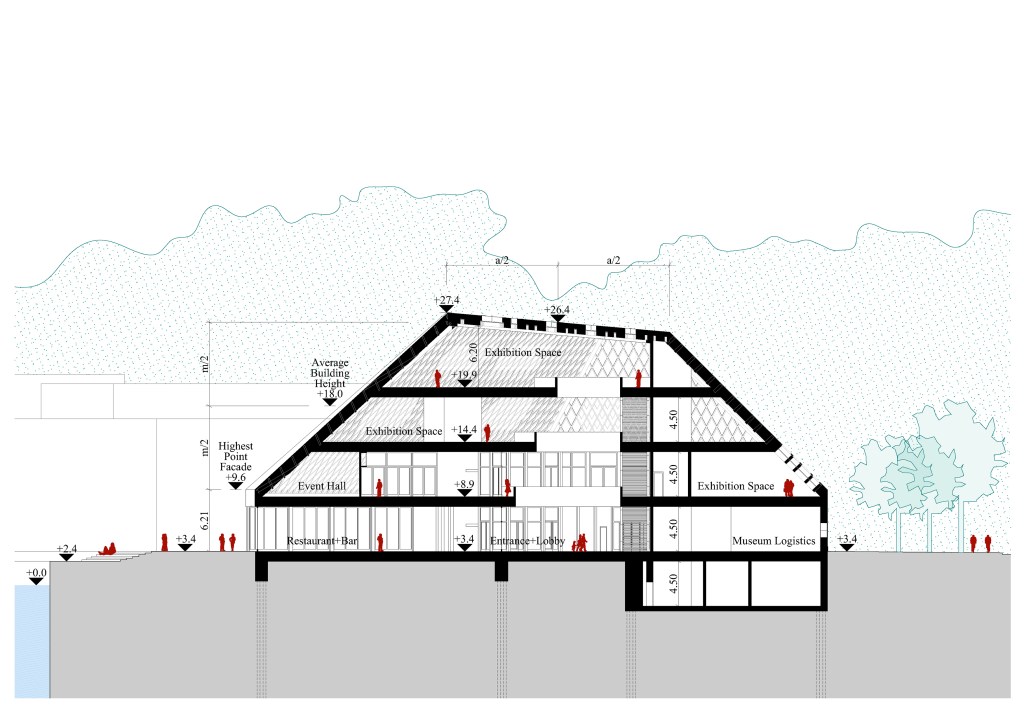
Because of the waterfront situation it is not ecological to plan a big basement floor unter the building. Only 15% of the total gross floor area is placed on the basement and it should be built of concrete structure because of the presence of the sea. The mass of concrete is reduced from the ground floor to the top (only lift and stair cores), because the main structure of the building is designed by wood, which is a local and sustainable material in Finland.
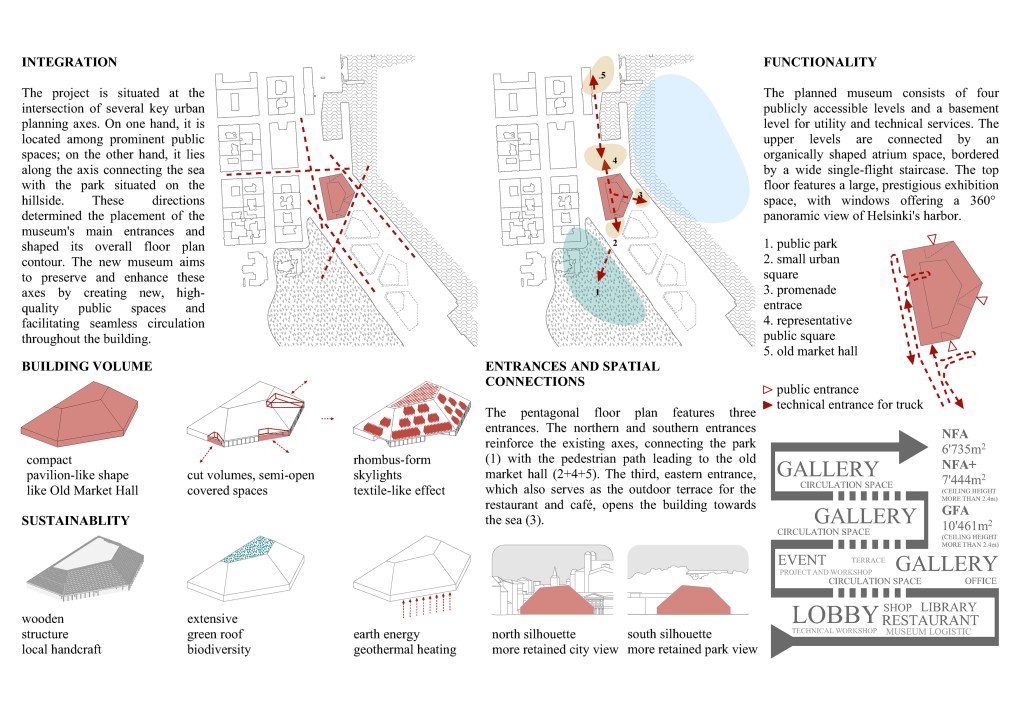
INTEGRATION: The project is situated at the intersection of several key urban planning axes. On one hand, it is located among prominent public spaces; on the other hand, it lies along the axis connecting the sea with the park situated on the hillside. These directions determined the placement of the museum’s main entrances and shaped its overall floor plan contour. The new museum aims to preserve and enhance these axes by creating new, high-quality public spaces and facilitating seamless circulation throughout the building.
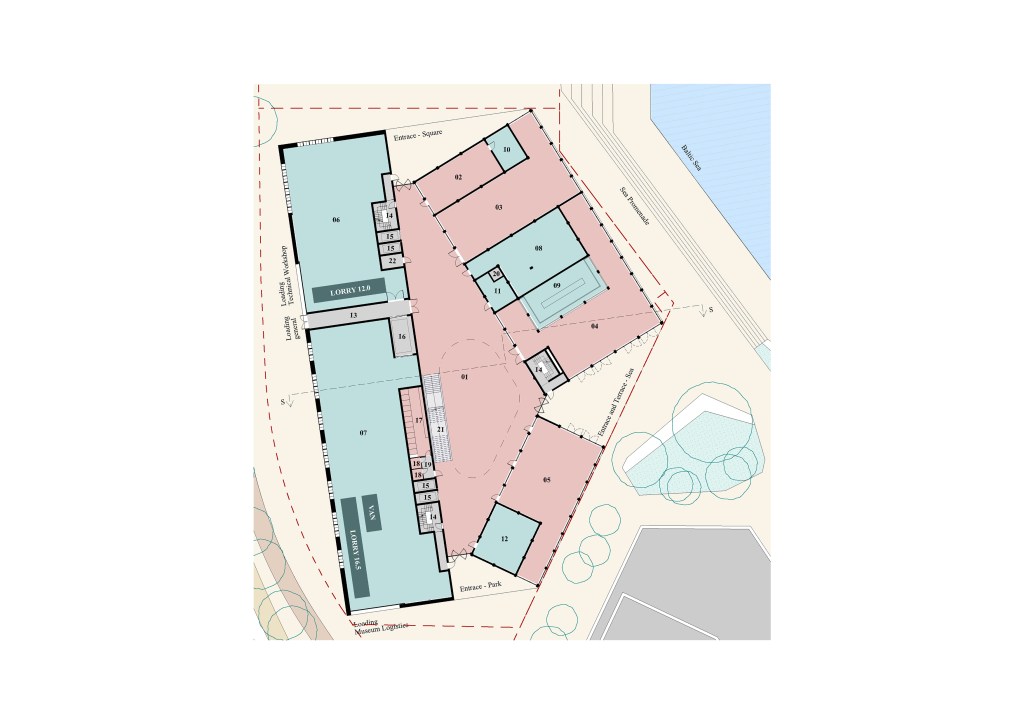
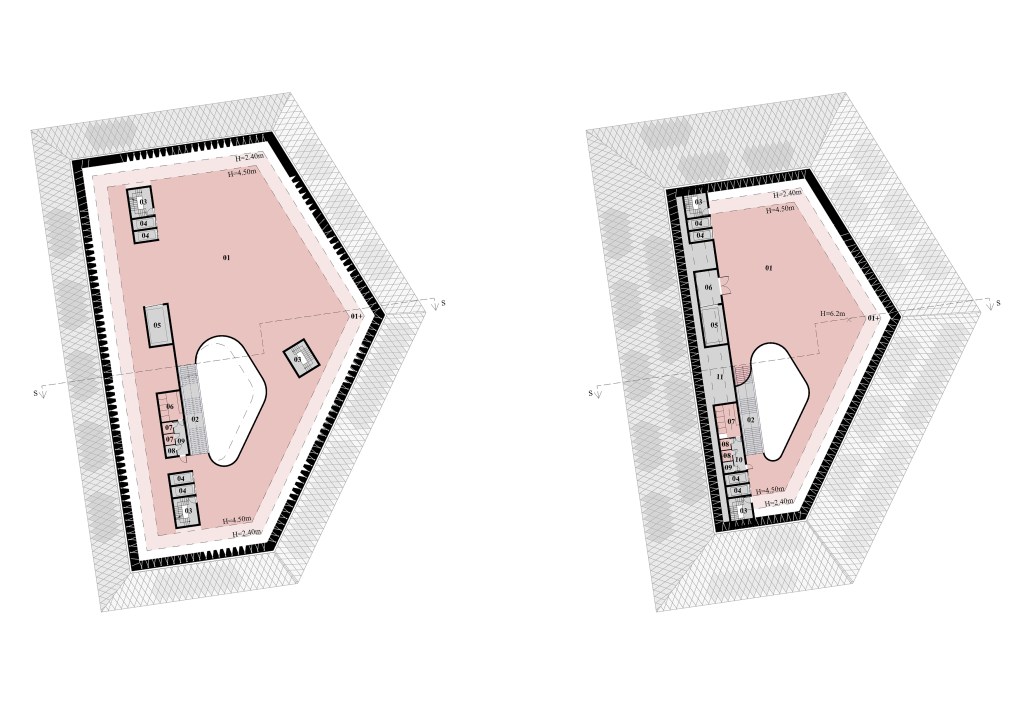
FUNCTIONALITY: The planned museum consists of four publicly accessible levels and a basement level for utility and technical services. The upper levels are connected by an organically shaped atrium space, bordered by a wide single-flight staircase. The top floor features a large, prestigious exhibition space, with windows offering a 360° panoramic view of Helsinki’s harbor.
ENTRANCES AND SPATIAL CONNECTIONS: The pentagonal floor plan features three entrances. The northern and southern entrances reinforce the existing axes, connecting the park with the pedestrian path leading to the old market hall. The third, eastern entrance, which also serves as the outdoor terrace for the restaurant and café, opens the building towards the sea.
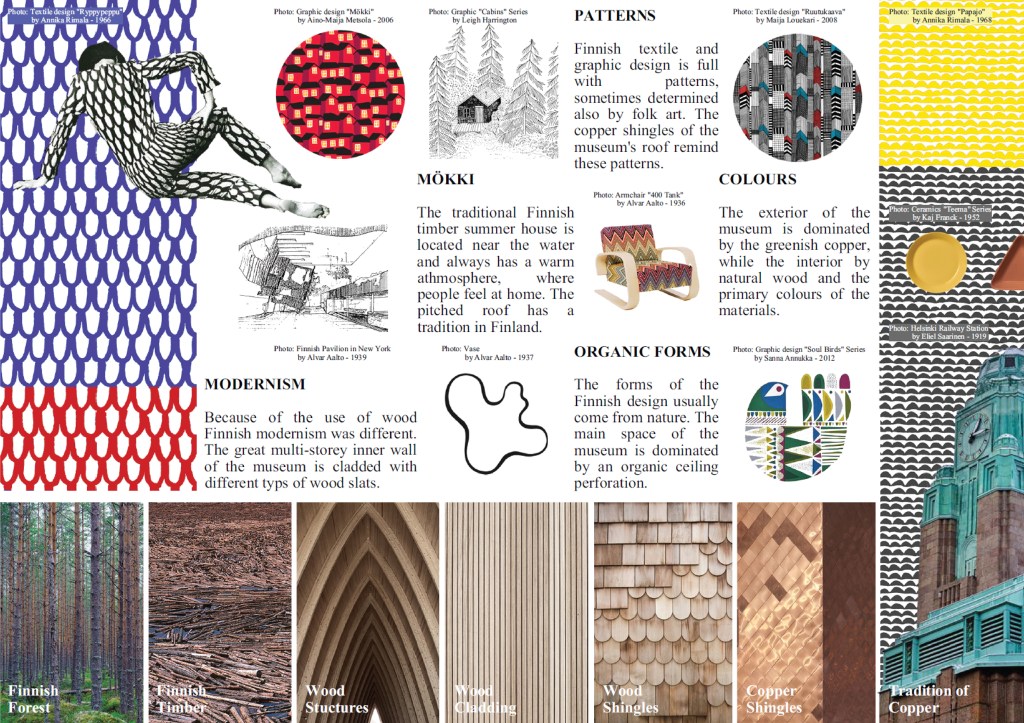
MODERNISM: Because of the use of wood Finnish modernism was different. The great multi-storey inner wall of the museum is cladded with different typs of wood slats.
MÖKKI: The traditional Finnish timber summer house is located near the water and always has a warm athmosphere, where people feel at home. The pitched roof has a tradition in Finland.
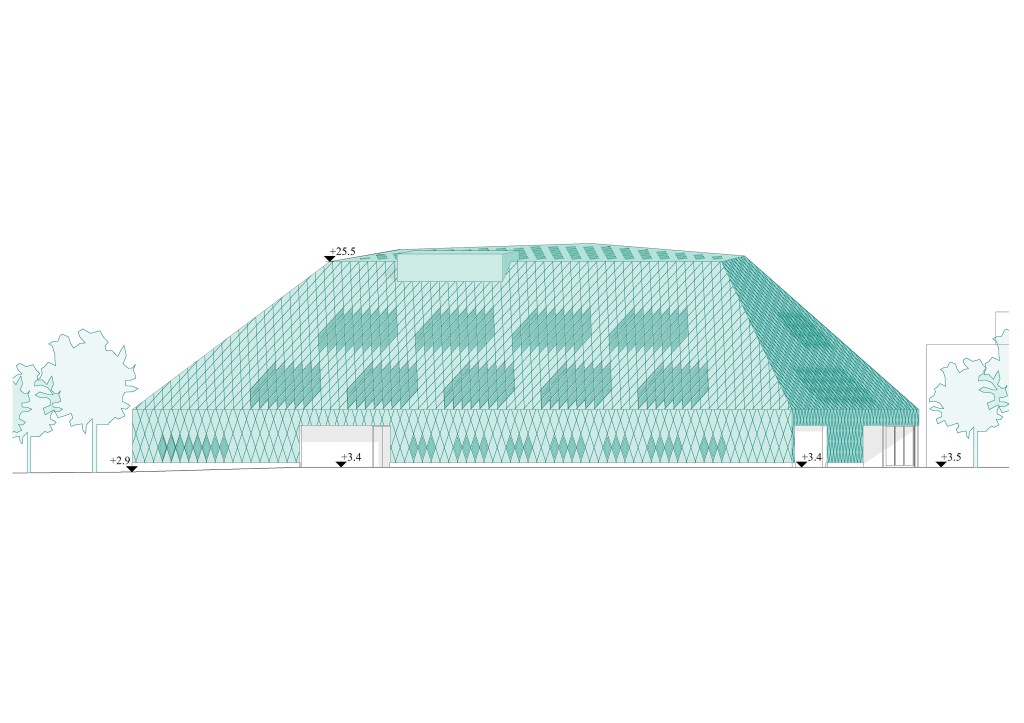
PATTERNS: Finnish textile and graphic design is full with patterns, sometimes determined also by folk art. The copper shingles of the museum’s roof remind these patterns.
ORGANIC FORMS: The forms of the Finnish design usually come from nature. The main space of the museum is dominated by an organic ceiling perforation.
COLOURS: The exterior of the museum is dominated by the greenish copper, while the interior by natural wood and the primary colours of the materials.
 ADAM BALOG